
Best wireless earbuds for running usually come down to two things you feel immediately: fit that does not budge, and sound that stays clear when sweat, wind, and traffic show up. If your earbuds loosen mid-run or you keep jabbing at controls with sweaty fingers, even great audio stops mattering.
This guide narrows the field using runner-relevant criteria, then maps those criteria to real use cases like treadmill sessions, outdoor long runs, interval work, and gym cross-training. You will also get a quick self-check, a comparison table, and a buying checklist so you can decide without overthinking it.
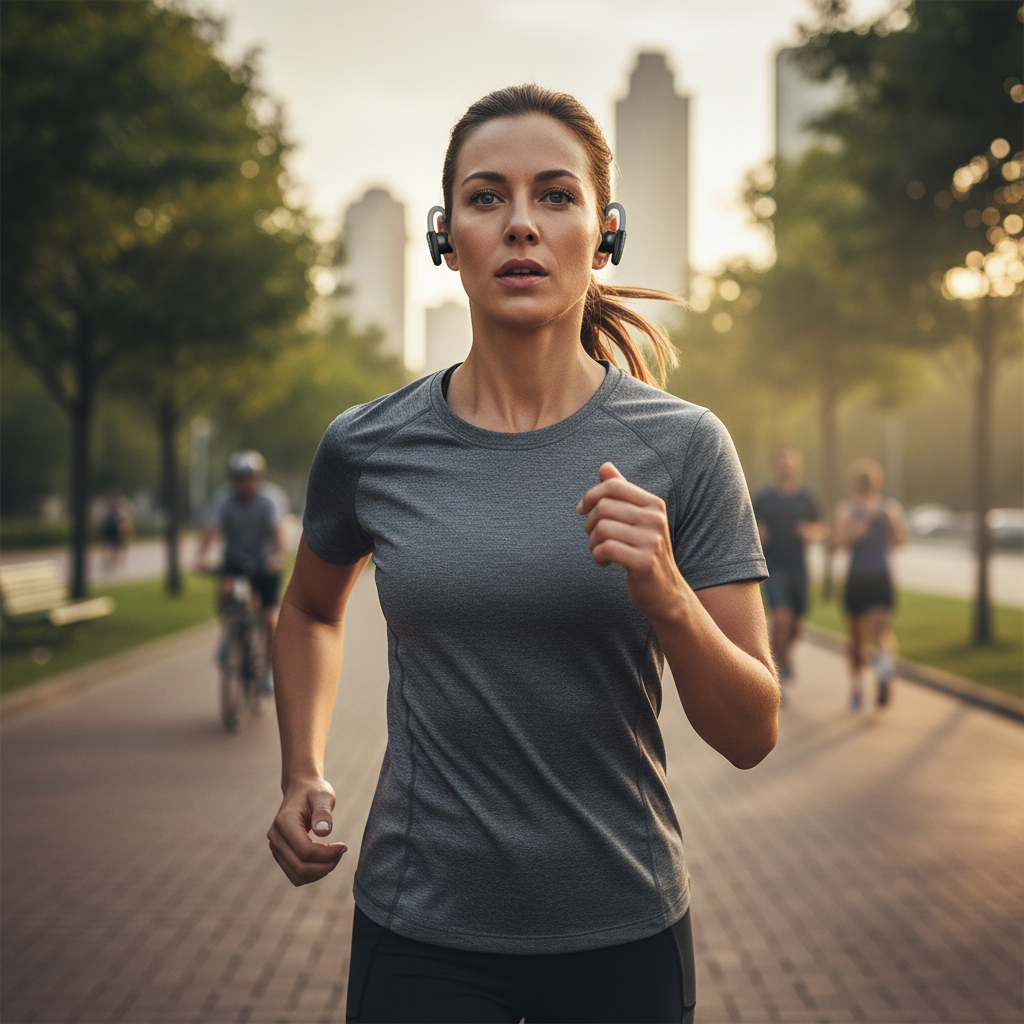
One quick note before we get into it: “best” depends on your ear shape and how you run. Two people can buy the same model, one loves it, the other returns it in 48 hours. So the goal here is match-making, not crowning a single winner.
What matters most for running (the short list)
If you only remember a few things, make it these. The best pairs for running tend to win on fit, sweat handling, and usable controls, not on fancy codecs you cannot hear over wind anyway.
- Secure fit: ear fins, wings, or hooks help more than “sticky” silicone tips.
- Sweat and water rating: look for IPX4 minimum, many runners prefer IPX5–IPX7 for heavy sweat and rain.
- Wind and call handling: mic placement and wind reduction matter for outdoor runs and phone calls.
- Battery that matches your week: case + buds should cover your longest run plus commute and errands.
- Controls you can use moving: physical buttons can beat touch controls when you are sweaty or wearing gloves.
- Awareness options: transparency mode or open-ear designs can feel safer around traffic.
Quick self-check: which runner profile are you?
Before you compare specs, figure out what you actually need. Most returns happen because people buy for the wrong scenario.
Pick the closest match
- Outdoor road runner: prioritize awareness mode, wind resistance, stable fit, and quick volume control.
- Treadmill or indoor track: ANC can be valuable, fit still matters, wind matters less.
- Intervals and fast workouts: stability and “no fuss” controls matter more than audiophile tuning.
- Gym + running hybrid: durable hinges, easy cleaning, and strong sweat rating rise to the top.
- Long-run / marathon training: comfort after 90+ minutes and reliable battery become make-or-break.
Key takeaway: if you cannot keep earbuds seated during warm-up jog, no EQ setting will save the run.
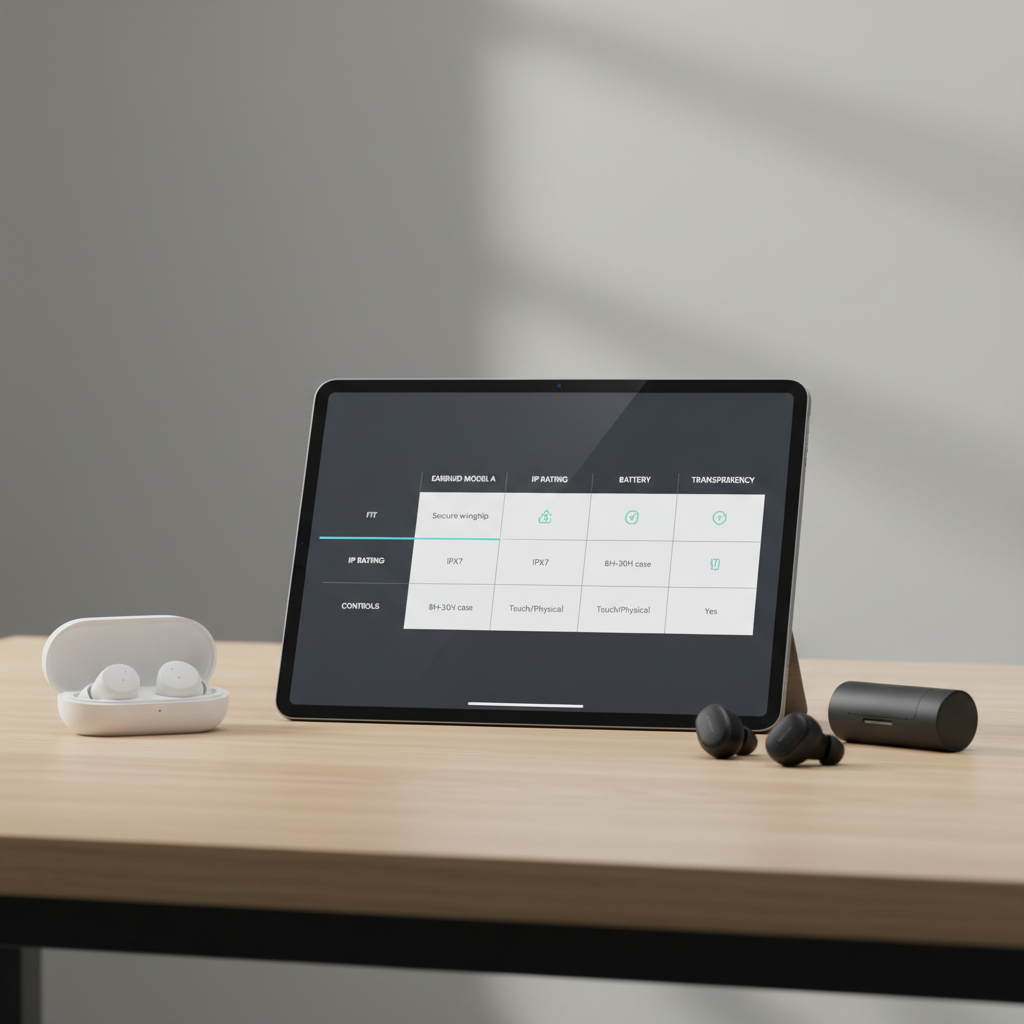
Comparison table: features that actually change your run
This is not a brand ranking. It is a practical way to filter models when shopping, because “premium” earbuds can still be a poor running choice.
| Feature | Why runners care | Good sign | Watch out for |
|---|---|---|---|
| Fit system | Prevents slip-outs and hot spots | Multiple tip sizes + wings/hooks | Only one tip style, “one-size” fit claims |
| Water/sweat rating | Helps survive sweat, rain, rinsing | IPX5–IPX7 for heavy sweaters | No IP rating listed, or unclear warranty terms |
| Transparency/awareness | Helps hear traffic and cyclists | Natural-sounding transparency | Hissy awareness, delayed sound |
| ANC (noise canceling) | Useful in gyms, transit, windy days vary | Adjustable ANC levels | Strong occlusion “thump” while running |
| Controls | Mid-run changes without stopping | Customizable controls, easy volume | Over-sensitive touch, no lockout |
| Battery | Long runs, travel weeks | Reliable real-world playback | Battery drops fast with ANC on |
| Connectivity | Fewer dropouts outdoors | Stable Bluetooth, multi-point if needed | Left/right desync, crowded areas issues |
How to choose the best wireless earbuds for running (by scenario)
Here is the part most shopping guides skip: what to prioritize changes based on where and how you run. Use the scenario that matches your week, not your aspirational self.
Outdoor running: awareness and wind beat “perfect” sound
- Prioritize transparency that sounds natural enough you will actually use it.
- Look for wind handling in reviews, not just “clear calls” marketing.
- Choose secure fit hardware (wings/hooks) if you run on uneven sidewalks or trails.
According to the National Highway Traffic Safety Administration (NHTSA), pedestrian safety depends on staying alert to vehicles and surroundings, so many runners prefer some level of situational awareness instead of fully blocking sound.
Treadmill and gym: ANC and comfort matter more
- ANC helps with loud HVAC, treadmills, and gym music, if it does not create “thumping” with each step.
- Comfort over time matters because indoor sessions often stack run + lifting.
- Easy cleaning: smoother plastics and replaceable tips make maintenance simpler.
Long runs: stability plus low fatigue
- Pressure management: some sealed earbuds create ear fatigue after 60–90 minutes.
- Battery buffer: plan for your longest run plus at least one extra session.
- On-the-fly adjustments: volume and track skip should be doable without pulling your phone out.
Practical fit test (do this before you commit)
The fastest way to tell if a pair belongs in your rotation is a short, slightly annoying test. Do it once, avoid weeks of frustration.
- Shake test: insert earbuds, then gently shake your head and do 10 jumping jacks. Any looseness now becomes a full slip later.
- Sweat test: wear them 15 minutes into a run, then adjust once. If you keep re-seating them, fit is wrong.
- Seal vs. safety check: if you run outdoors, turn on awareness mode and listen for cars at low volume.
- Control test: change volume and skip track while moving. If you keep mis-tapping, that friction adds up.
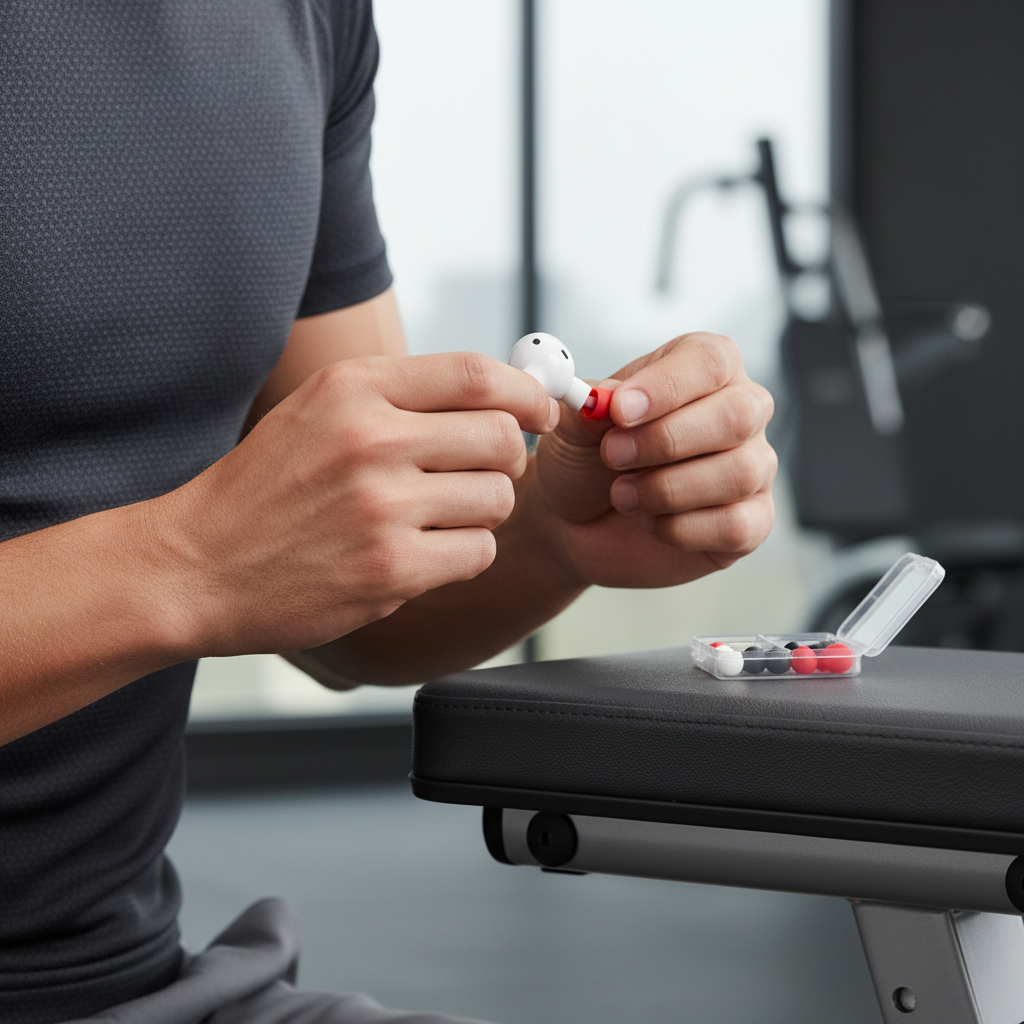
If you are between sizes, many runners do better with a slightly larger tip for stability, but comfort is personal. If you feel pressure or pain early, scale back and try another size or a different shape.
Common mistakes (and how to avoid them)
People rarely fail because they “picked a bad brand.” They fail because they optimize for the wrong thing.
- Buying for sound alone: audiophile tuning is nice, but a secure fit is what keeps bass consistent while running.
- Assuming IP rating means “waterproof forever”: IP ratings help, but sweat salt and heat still age materials. Rinse and dry if the manufacturer allows it.
- Overusing ANC outdoors: it can reduce awareness. Many runners reserve ANC for treadmill or travel.
- Ignoring ear tip inventory: if the box includes only three sizes and none fit, you may need third-party tips or a different model.
- Touch controls in winter: gloves plus sweat can make touch panels frustrating, physical buttons sometimes win here.
Safety, hygiene, and when to ask for help
Earbuds seem harmless, but small issues can snowball when you run daily. If something feels off, take it seriously.
- Volume: keep listening levels moderate, especially outdoors. If you notice ringing or muffled hearing after runs, consider lowering volume and consult a clinician if symptoms persist.
- Skin irritation: itching or redness may come from trapped moisture or material sensitivity. Switch tips, dry thoroughly, and consider professional advice if irritation continues.
- Balance and awareness: if you feel less aware around traffic with sealed earbuds, choose transparency or open-ear styles for road runs.
According to the American Academy of Otolaryngology–Head and Neck Surgery (AAO-HNS), hearing health topics often emphasize prevention and reasonable listening habits; if you suspect hearing changes, a hearing professional can give a clearer answer than guesswork.
Conclusion: a simple way to pick your pair
The best wireless earbuds for running are the ones you forget about once the run starts: they stay put, handle sweat, and let you control playback without drama. Start by choosing your runner profile, then filter by secure fit features and a real-world sweat rating, and only then worry about “extras” like codecs or ultra-premium sound.
If you want a clean next step, make a shortlist of three models, run the quick fit test within the return window, and keep the one that stays stable at your fastest pace.
Action idea: write down your top two annoyances from your last run (slipping, wind noise, poor controls, battery anxiety) and buy to eliminate those first.
FAQ
What is the most important feature in the best wireless earbuds for running?
Fit stability. If the earbuds move, sound changes, controls get annoying, and you end up adjusting constantly, so features like ANC or premium audio become secondary.
Is ANC good for running outside?
It depends. Many runners avoid strong ANC near traffic because it can reduce awareness, while using it on treadmills or quieter paths. If you run in busy areas, transparency mode or open-ear designs may feel more comfortable.
What IP rating should I look for if I sweat a lot?
IPX4 is a common minimum for workouts, but heavy sweaters often look for IPX5–IPX7. Even then, you still want to clean and dry earbuds regularly because sweat salt can be harsh over time.
Why do my earbuds keep slipping even with the right tip size?
Often it is shape, not size. Some ears need wings or hooks for mechanical support, and some nozzles simply do not match certain ear canals. Trying a different style can solve it faster than hunting for “perfect” tips.
Are open-ear earbuds better for road running?
They can be, especially if you prioritize awareness. The tradeoff is less bass and less isolation, so they may feel underpowered in loud environments.
How much battery do I really need for marathon training?
Plan for your longest run with a buffer, plus the reality that battery can drop faster with ANC or high volume. If you do weekend long runs, look for dependable single-charge playback, not just case totals.
Do more expensive earbuds always perform better for running?
Not always. Premium models may excel at ANC and sound, but some are slick and less stable when you sweat. For running, a midrange sports-focused design can outperform a pricier “everyday” earbud.
If you are deciding between a few options and want a more “no regrets” path, share your running environment, longest run time, and whether you prefer awareness or isolation, and it becomes much easier to narrow to the one or two models that realistically fit your routine.